
Is Light Language the same as speaking in tongues?
It’s a question I’ve been asked more than once over the years.
For a long time, my answer was always the same:
“I don’t know.”
Not because I was trying to avoid the conversation, but because I had never actually heard speaking in tongues before. I didn’t think it was fair to have an opinion about something I had never personally experienced. I could have guessed. I could have compared what other people said online. But that didn’t feel honest to me.
Sometimes, “I don’t know,” is the most truthful answer I can give.
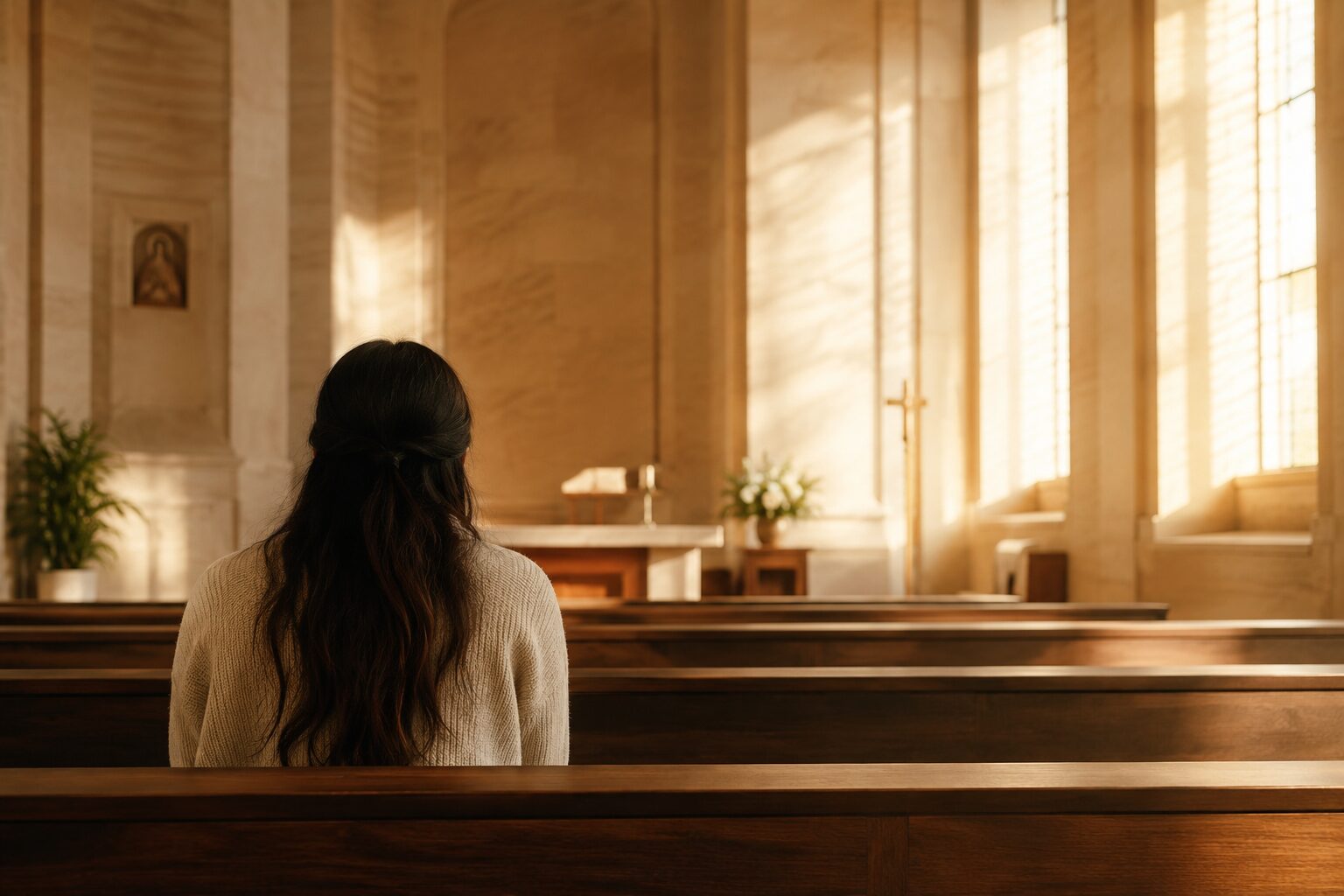
That changed during the recent St. Anne Novena.
For ten days, I found myself listening to prayer in tongues every day. It wasn’t something I was studying or analyzing. I was simply there to pray.
Then something unexpected happened.
My immediate inner response was:
“Oh… this feels familiar.”
As someone who has spoken Light Language for years, my first instinct was to recognize something that felt deeply known. It wasn’t an intellectual comparison. It wasn’t me trying to fit one spiritual tradition into another.
It was simply a quiet sense of familiarity.
Almost immediately, another thought followed.
No. In this context, this is called speaking in tongues.
That distinction felt important.
Before I continue, I want to be clear that I’m not an expert in Christian theology, so I’m probably not the best person to explain the Christian understanding of speaking in tongues. What I’m sharing here isn’t a theological argument or an attempt to compare two traditions. It’s simply my personal experience after hearing speaking in tongues for the first time.
One moment, in particular, has stayed with me.
During one of the prayers, I noticed something happening almost instinctively. As she prayed in tongues, I could feel my own Light Language wanting to emerge. It wasn’t an attempt to imitate what I was hearing. In fact, it didn’t even sound the same. It simply felt as though something within me wanted to join the prayer in the only way it knew how.
So I quietly found myself speaking Light Language too.
That surprised me more than anything else.
Over the course of those ten days, I also began noticing subtle shifts in my own Light Language. New sounds emerged. Different rhythms appeared naturally. My voice seemed to explore expressions that hadn’t been there before.
To me, that wasn’t unusual.
I’ve experienced something similar before when listening to other people speak Light Language. Sometimes hearing another person’s authentic expression seems to awaken something within my own. It isn’t about imitation. In fact, if I consciously tried to copy someone else’s sounds, it would probably feel forced.
This felt completely different.
It was effortless.
Almost as though another layer of expression had quietly become available.
That experience made me curious.
Not curious enough to declare that Light Language and speaking in tongues are the same.
And not curious enough to insist that they’re completely different.
Just… curious.
From what I understand, Christianity has its own theological understanding of speaking in tongues, while the Light Language community understands Light Language through a different spiritual framework.
What I can describe honestly is what it felt like to be the person receiving the experience.
In both cases, I heard sounds that my analytical mind couldn’t translate.
In both cases, I didn’t feel anxious about not understanding every syllable.
In both cases, there was a sense of prayer, reverence, and something beyond ordinary language.
That doesn’t automatically mean they’re the same phenomenon.
It simply means that, for me, the experience carried a familiar quality.
Looking back, I’m actually grateful I didn’t try to answer this question years ago.
If I had, my answer would have been based on assumptions rather than experience.
Now, my answer is still not definitive—but it is honest.
If someone asks me today whether Light Language and speaking in tongues are the same, my response would probably be this:
“I don’t know if they’re the same, and I’m not trying to prove that they are. What I do know is that hearing speaking in tongues for the first time felt unexpectedly familiar, and it influenced the way my own Light Language began to express itself.”
That’s something I can say with integrity because it happened.
Nothing more.
Nothing less.
One of the gifts of this experience wasn’t that it gave me an answer.
It reminded me that not every meaningful experience has to end with certainty.
Sometimes we encounter something from another tradition that resonates deeply with our own experience.
Sometimes that resonance invites dialogue rather than debate.
Sometimes it expands our curiosity instead of confirming our conclusions.
For me, this was one of those moments.
Rather than walking away convinced that I had solved the mystery, I walked away with something I value even more: a deeper respect for another tradition, a renewed appreciation for my own path, and the humility to let some questions remain open.
Perhaps that’s where genuine learning begins—not with certainty, but with the willingness to encounter something unfamiliar and simply say,
“That felt surprisingly familiar.”
I’d love to hear from you.
Have you ever encountered something from another spiritual tradition that felt unexpectedly familiar—not because you believed it was the same, but because it stirred something within your own experience?
Feel free to share your thoughts in the comments. I’d genuinely love to read them.
If this is your first introduction to Light Language, or you’re curious to understand what I mean by it, I’ve recorded an 8-minute video where I explain what Light Language is and the different ways it can be expressed. I hope it gives you a helpful starting point.
LEAVE A COMMENT
Comments